

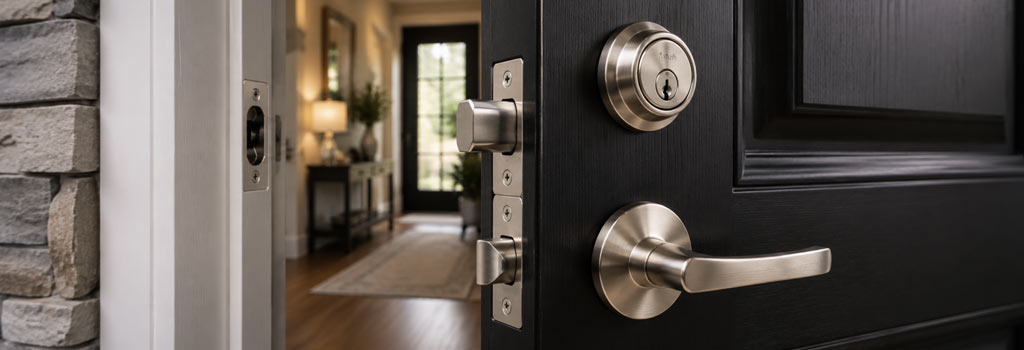
Your front door is only as secure as its weakest component. While homeowners often focus on choosing a strong entry door, the lock itself plays an equally important role in protecting the home. A quality deadbolt helps resist forced entry, but it works best when paired with a durable door, a reinforced frame, and professional installation.
Whether you’re replacing an old lock, upgrading your home’s security, or selecting hardware for a new entry door, understanding how deadbolts work can help you make a more informed decision. This guide explains the different types of deadbolts, compares traditional and smart locking systems, and highlights the features that matter most when choosing the best lock for your front door.
What Is a Deadbolt and Why Does It Matter?
A deadbolt is a locking mechanism designed specifically to improve door security. Unlike the spring latch found in a standard doorknob or lever handle, a deadbolt uses a solid steel bolt that extends deep into the door frame when locked. Because it cannot simply be pushed back with pressure, it provides much greater resistance against forced entry.
A typical entry door uses two separate pieces of hardware:
- A handle or knob that operates the spring latch for everyday use.
- A deadbolt that provides the primary level of security when the door is locked.
This simple difference makes a significant impact. A properly installed deadbolt helps protect against common break-in methods such as kicking, prying, or attempts to force the latch open.
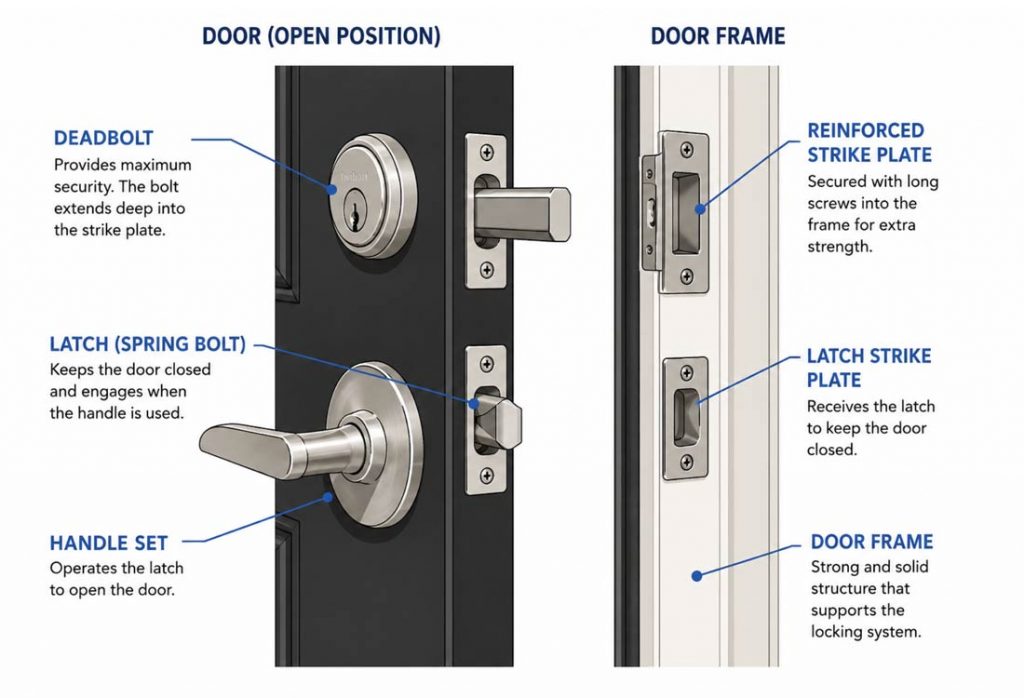
However, even the strongest lock cannot compensate for poor installation or a weak door. A reinforced frame, quality strike plate, and durable door construction all contribute to the overall security of your home’s entrance.
Types of Deadbolts
Not all deadbolts are designed for the same application. The best choice depends on your door design, household needs, and the level of convenience you want.
| Deadbolt Type | Best For | Advantages | Considerations |
|---|---|---|---|
| Single-cylinder deadbolt | Most front entry doors | Secure and easy to operate from inside | Requires a key on the exterior side |
| Double-cylinder deadbolt | Doors with glass near the lock | Extra protection against reach-through entry | Requires a key on both sides |
| Keyless electronic deadbolt | Keypad entry | No physical keys required | Requires batteries |
| Smart deadbolt | Smart home systems | Remote access, automation, activity logs | Higher cost and battery maintenance |
For most Canadian homes, a single-cylinder deadbolt remains the most common and practical solution because it provides an excellent balance of security, convenience, and everyday usability. Double-cylinder models can offer additional protection for specific door designs, while electronic and smart deadbolts add convenience without necessarily increasing the physical strength of the locking mechanism.
Single vs Double Cylinder Deadbolt
One of the most common questions homeowners ask is whether they should choose a single-cylinder or double-cylinder deadbolt. Both provide a high level of security when properly installed, but each is designed for different situations.
Single-Cylinder Deadbolt
A single-cylinder deadbolt uses a key on the exterior side and a thumb turn on the interior side. This is the standard configuration found on most residential entry doors.
- Quick and easy to lock or unlock from inside.
- Convenient for everyday use.
- Allows fast exit without searching for a key.
- Compatible with most front door designs.
Because of its convenience, this is the deadbolt most homeowners choose for their primary entrance.
Double-Cylinder Deadbolt
A double-cylinder deadbolt requires a key to unlock the door from both the outside and the inside.
This design is often considered for entry doors with large glass inserts located close to the lock. If someone were to break the glass, they would still need the key to unlock the deadbolt from inside.
However, this added protection comes with an important trade-off. Because a key is required to unlock the door from the interior, exiting quickly during an emergency may be more difficult. Before choosing this type of lock, homeowners should consider local building and fire safety requirements, as they may affect where double-cylinder deadbolts are appropriate.
| Feature | Single Cylinder | Double Cylinder |
|---|---|---|
| Exterior operation | Key | Key |
| Interior operation | Thumb turn | Key |
| Everyday convenience | Excellent | Moderate |
| Glass door protection | Good | Better |
| Emergency exit | Fast | Key required |
For the majority of homes, a high-quality single-cylinder deadbolt offers the best balance between security and convenience. Double-cylinder models are typically reserved for specific entry door designs where additional protection against reach-through access is a priority.
Smart Lock vs Deadbolt: Which Is Better?
Homeowners often compare smart locks with traditional deadbolts, but the two are not direct competitors. A deadbolt is the locking mechanism itself, while a smart lock refers to the way that mechanism is operated.
Many of today’s smart locks are actually smart deadbolts. They replace or upgrade a traditional deadbolt while adding features such as smartphone control, temporary digital access, remote locking, and activity monitoring.
If you’re interested in connected home technology, be sure to read our detailed guide to Smart Door Locks, where we explain how smart locking systems work and the features available in today’s models.
| Feature | Traditional Deadbolt | Smart Deadbolt |
|---|---|---|
| Physical security | Excellent | Excellent* |
| Key operation | Yes | Optional |
| Remote access | No | Yes |
| Activity history | No | Yes |
| Battery required | No | Yes |
| Typical cost | Lower | Higher |
*Depends on the quality of the locking mechanism and proper installation.
A traditional deadbolt remains an excellent choice for homeowners who value simplicity, durability, and minimal maintenance. Smart deadbolts add convenience and flexibility, making them especially useful for busy households, vacation properties, or homeowners who frequently provide temporary access to guests or service providers.
Ready to Upgrade Your Entry Door Security?
The right deadbolt is only one part of a secure entrance. Choosing a durable entry door, quality locking hardware, and professional installation helps create a complete security system that protects your home while improving everyday convenience.
How to Choose the Best Deadbolt Lock for Your Front Door
Not all deadbolts provide the same level of protection. While many models may look similar, differences in build quality, materials, and security features can significantly affect their performance over time.
Security Grade
One of the first things to check is the lock’s ANSI/BHMA security grade. Grade 1 offers the highest level of residential security, while Grade 2 provides excellent protection for most homes. Grade 3 is intended for lighter-duty residential applications and generally offers the lowest level of security.
For most homeowners, choosing a Grade 1 or Grade 2 deadbolt is a worthwhile investment.
Bolt Length and Construction
A quality deadbolt should have a solid steel bolt with a one-inch throw. A longer, stronger bolt extends deeper into the door frame, making forced entry more difficult.
Reinforced Strike Plate
Even the strongest deadbolt relies on the strike plate attached to the door frame. A reinforced strike plate secured with long screws provides much greater resistance against kicking or prying than a standard installation.
Pick and Bump Resistance
Many modern deadbolts include cylinders designed to resist lock picking and bump-key attacks. These features provide an additional layer of protection and are worth considering when purchasing a premium deadbolt.
Ease of Everyday Use
Security is important, but so is convenience. Consider how often the door is used, who will operate the lock, and whether features such as keyless entry or smartphone control would make everyday access easier.
Your Door Matters as Much as the Lock
Installing a premium deadbolt on a weak or damaged door will not provide the level of protection most homeowners expect. A secure entry system depends on every component working together.
The condition and construction of the door itself play a major role in overall security. A solid, properly installed entry door provides the foundation that allows a deadbolt to perform as intended. Organizations such as Fenestration Canada emphasize that the performance of an entry door depends on the quality of the complete door system, including the door slab, frame, hardware, weather sealing, and professional installation.
If you’re planning a complete entry door upgrade, it’s worth comparing the different materials available. Our guides to exterior doors, steel doors, and fiberglass doors explain how each option differs in terms of durability, security, maintenance, and energy efficiency.
The door frame is equally important. Even a Grade 1 deadbolt can be compromised if it’s installed in a weak or damaged frame. Reinforced strike plates, long mounting screws, and proper alignment all help distribute force more effectively during an attempted break-in.
Rather than viewing the lock as a standalone security feature, think of your entry system as a complete package. A quality door, a reinforced frame, professional installation, and a reliable deadbolt work together to provide the best long-term protection for your home.
Conclusion
Choosing the right deadbolt is one of the simplest ways to improve your home’s security, but the lock should never be considered in isolation. The best results come from combining a high-quality deadbolt with a strong entry door, a reinforced frame, and proper installation.
Whether you prefer a traditional mechanical deadbolt or a smart locking system with connected features, selecting quality hardware that matches your home’s needs will provide greater security, reliability, and peace of mind for years to come.
Frequently Asked Questions
What is the best deadbolt lock for a front door?
For most homeowners, a Grade 1 or Grade 2 single-cylinder deadbolt from a reputable manufacturer offers the best combination of security, durability, and ease of use.
Are smart deadbolts as secure as traditional deadbolts?
Yes, many smart deadbolts offer the same level of physical security as traditional models because they use a similar locking mechanism. The main difference is convenience.
Should I choose a single or double-cylinder deadbolt?
A single-cylinder deadbolt is the preferred choice for most homes because it can be unlocked quickly from the inside. A double-cylinder deadbolt may be useful for doors with large glass inserts near the lock.
Can I replace a deadbolt without replacing the entire door?
In many cases, yes. If the door and frame are in good condition and use standard hardware dimensions, replacing the deadbolt is usually a straightforward upgrade.
Does a steel or fiberglass door improve deadbolt security?
A quality steel or fiberglass entry door provides a stronger foundation for your deadbolt than an aging or damaged door. The lock, frame, hinges, and strike plate all contribute to overall security.
Ready to Upgrade Your Entry Door Security?
The right deadbolt is only one part of a secure entrance. Choosing a durable entry door, quality locking hardware, and professional installation helps create a complete security system that protects your home while improving everyday convenience.