

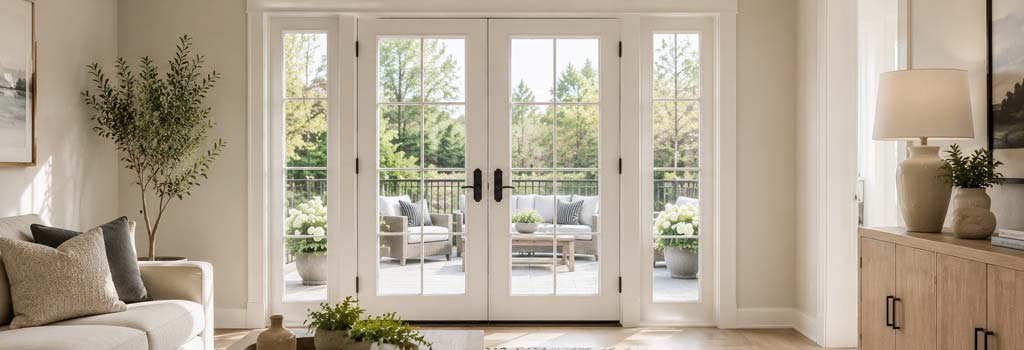
French doors are popular in Canadian homes because they combine a wide opening with plenty of natural light. Indoors, they can separate a home office or dining room without closing it off visually. Outside, they create an elegant connection to a patio, deck, or backyard.
However, exterior French doors have to do more than look good. Glass performance, weatherstripping, frame construction, hardware, and installation all affect how well they perform in Canadian weather.
What Are French Doors?
French doors are typically a pair of hinged doors installed side by side, with glass covering a significant portion of each panel.
Usually, one panel serves as the active door for everyday use. The inactive panel remains secured but can be opened when a wider passage is needed. Depending on the configuration and available space, French doors may swing inward or outward.
Although traditionally associated with divided glass panes, modern French doors can also feature large uninterrupted glass panels and minimalist frames.
Interior vs Exterior French Doors
Interior and exterior French doors may look similar, but they have very different performance requirements.
| Feature | Interior French Doors | Exterior French Doors |
|---|---|---|
| Typical Use | Office, dining and living areas | Patio, deck, backyard |
| Insulation | Usually not required | Important |
| Glass | Selected mainly for design/privacy | Insulated glazing |
| Weather Sealing | Minimal | Required |
| Security | Interior hardware | Exterior-grade locks |
| Installation | Interior opening | Weather-resistant installation |
Interior French doors are mainly used to divide rooms while maintaining natural light and visual connection.
Exterior French doors form part of the home’s exterior envelope and must address heat loss, drafts, moisture, and security. When comparing exterior door options, consider the complete system — glass, frame, seals, threshold, and hardware — rather than appearance alone.
Popular French Door Styles for Canadian Homes
French doors are available in styles ranging from traditional divided-light designs to contemporary full-glass models.
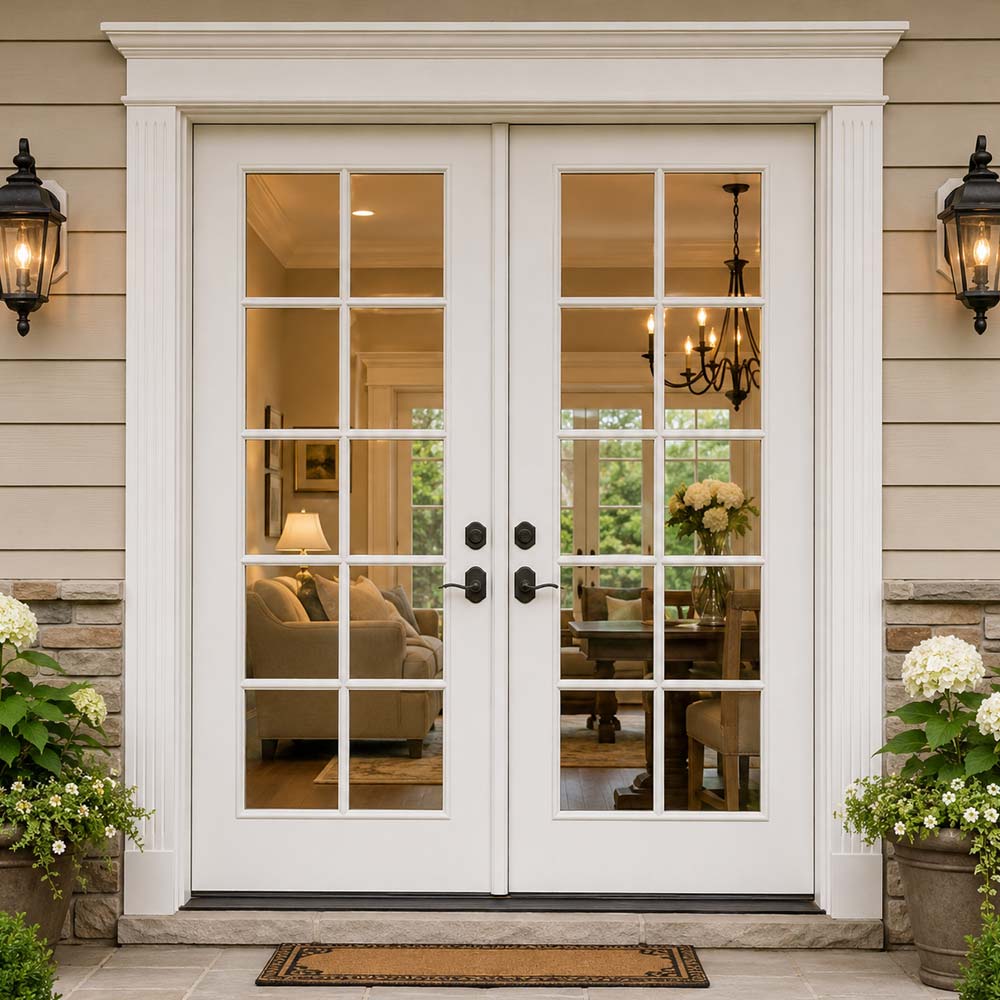
Traditional French doors use grids or simulated divided lites to create the familiar multi-pane appearance. They work particularly well with traditional and transitional homes.
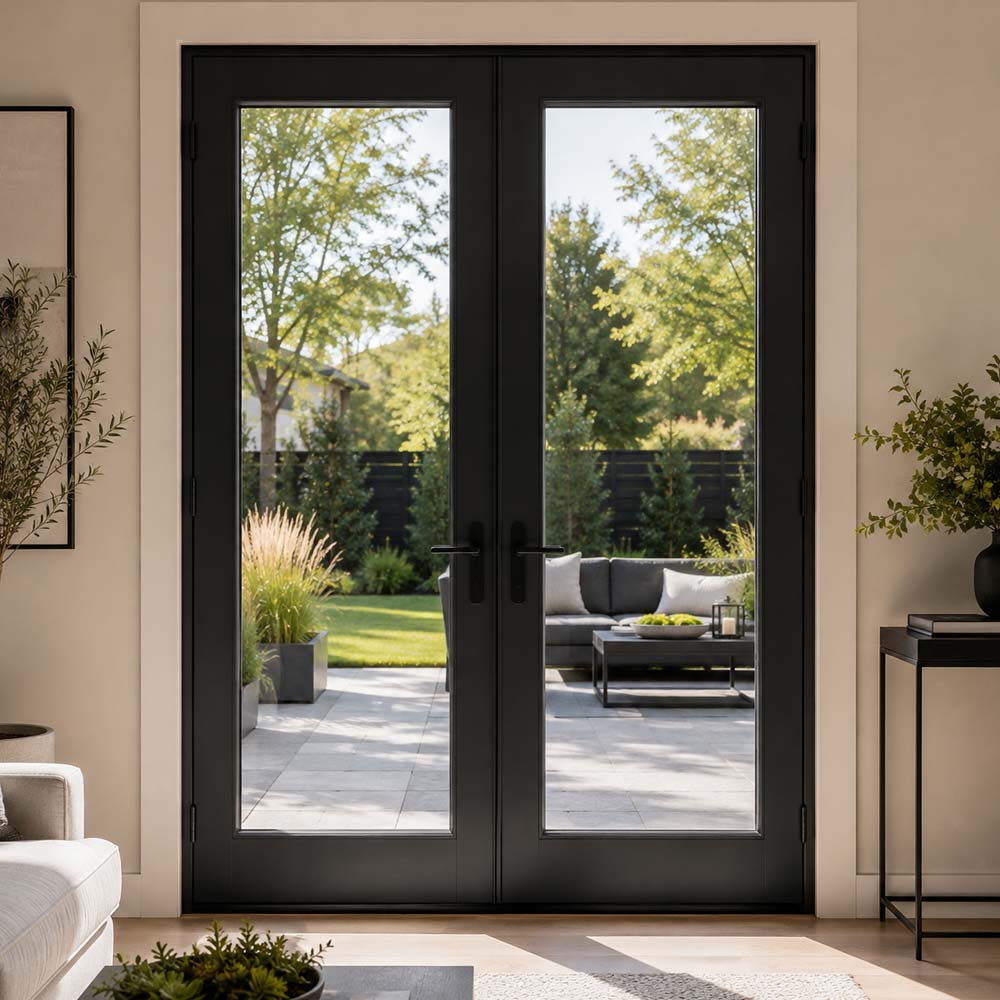
Modern French doors typically feature larger glass panels, simpler profiles, and neutral or black finishes.
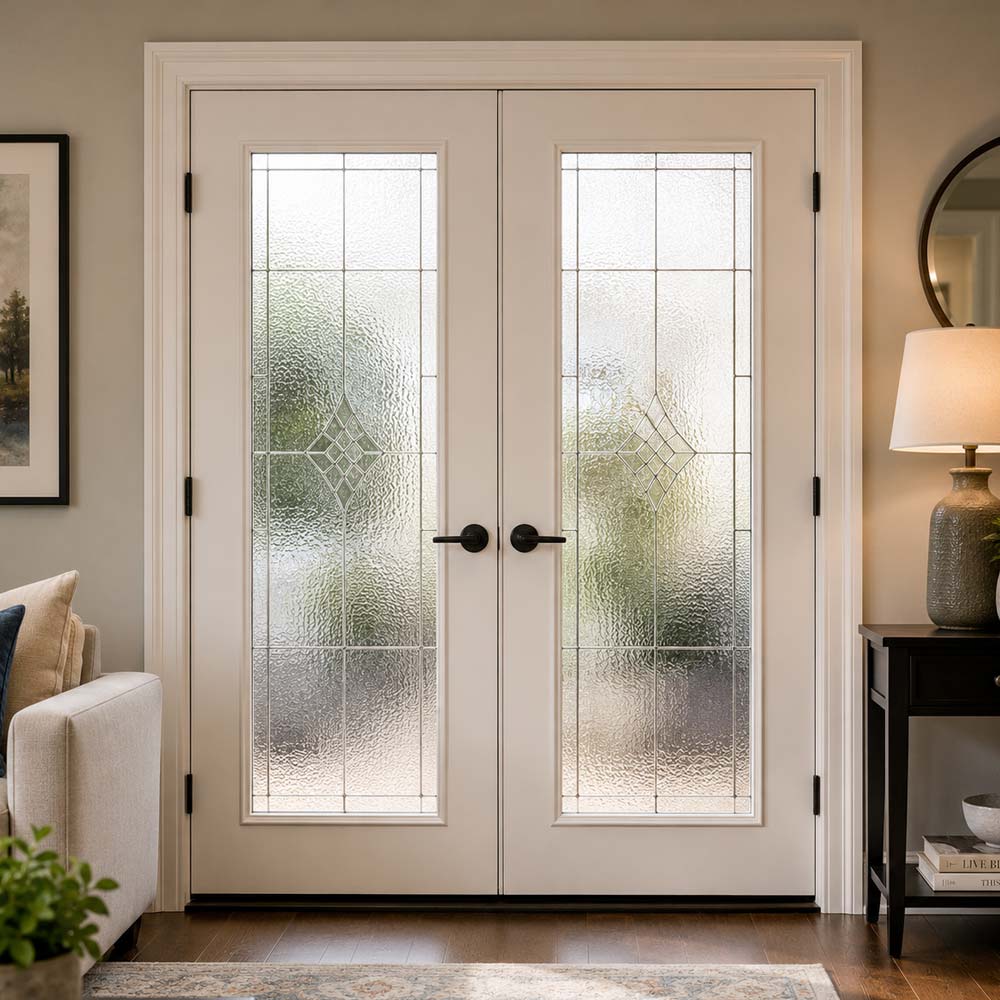
French doors with decorative or privacy glass provide natural light while limiting visibility. Frosted, textured, and patterned options can also become a design feature. Different door glass inserts and designs make it possible to adjust both privacy and appearance.
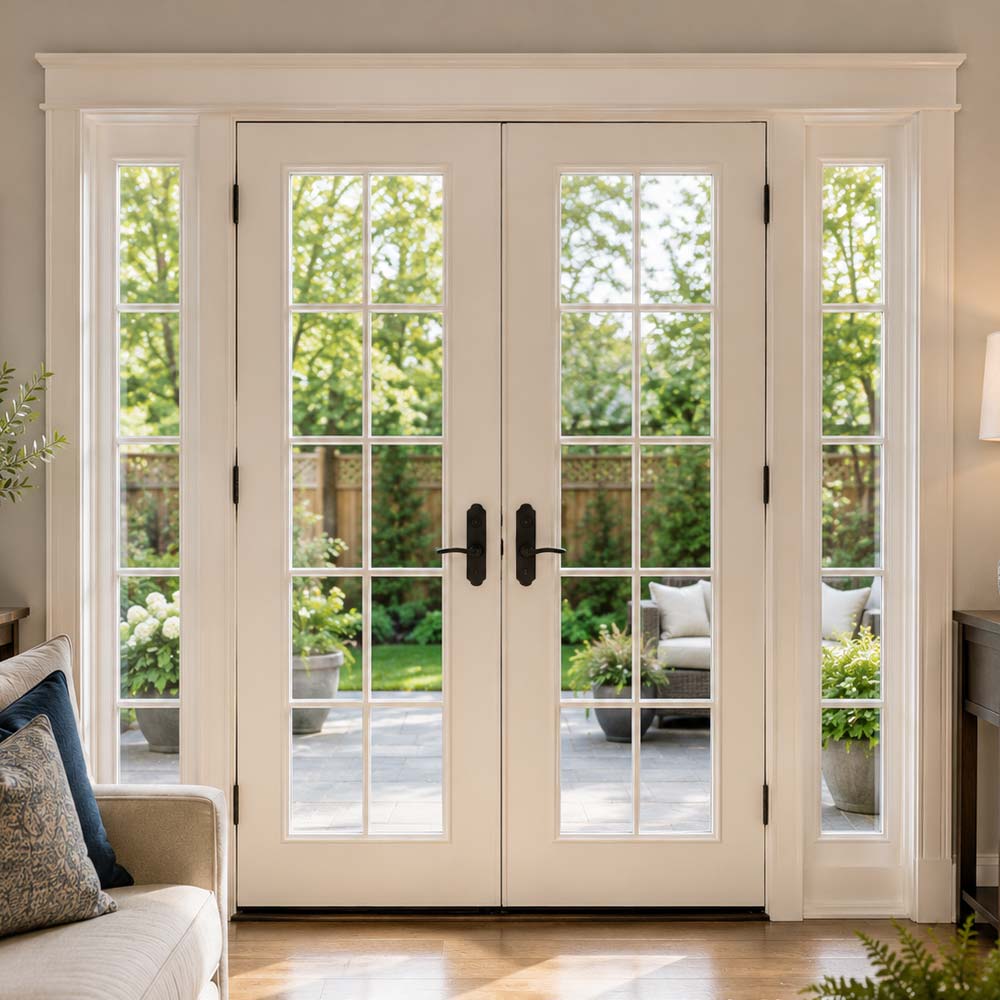
French doors with sidelights add fixed glass panels beside the doors, bringing more daylight into the room and creating a wider architectural feature. Because they increase the total glazed area, glass performance and privacy deserve extra consideration.
Are French Doors Energy Efficient?
Modern exterior French doors can be energy efficient enough for Canadian homes, but performance depends on the entire door system.
Look for:
- double or triple glazing;
- Low-E coatings;
- argon-filled insulated glass;
- insulated door and frame construction;
- continuous weatherstripping;
- a properly sealed threshold;
- accurate installation.
The centre joint between the two panels is particularly important. Poor alignment or worn seals can create drafts even when the glazing itself performs well.
For energy-efficient exterior French doors, homeowners should therefore compare the glass, frame, seals, threshold, and installation together rather than focusing only on the amount of glass.
French Doors vs Other Patio Door Options
French, sliding, garden, and folding doors can all provide patio or backyard access, but they work differently.
| Feature | French Doors | Sliding Doors | Garden Doors | Folding Doors |
|---|---|---|---|---|
| Opening | Two hinged panels | Slides horizontally | Usually one active hinged panel | Multiple folding panels |
| Swing Space | Required | Not required | Required | Some clearance |
| Glass Area | Large | Very large | Large | Very large |
| Typical Style | Classic to modern | Contemporary | Traditional | Contemporary |
| Best For | Wide double-door opening | Space-saving | Traditional patio access | Very large openings |
When comparing French doors vs sliding doors, space is often the deciding factor. French doors provide a wide opening when both panels are used, while sliding doors require no swing clearance and work well in smaller rooms or on narrow decks.
Garden doors may look similar to French doors but typically use one primary operating panel. Folding systems can open a much larger portion of a wall but involve a more complex multi-panel design.
Homeowners comparing these configurations can explore garden, patio and sliding door options before choosing a system.
What to Consider Before Installing French Doors
Before choosing French doors, check a few practical details:
- Available swing space: Make sure panels will not hit furniture, walls, railings, or outdoor features.
- Opening direction: Decide whether an in-swing or out-swing configuration works better for the space.
- Rough opening: Replacing another door type may require modifications to the existing opening.
- Active panel width: Make sure one panel provides enough room for comfortable everyday use.
- Privacy: Consider textured or privacy glass where clear glazing would expose the interior.
- Energy performance: Compare glazing, frame, seals, and threshold as one system.
- Security: Check how both the active and inactive panels lock.
- Weather exposure: Exterior doors should be designed and sealed for local wind, rain, snow, and temperature changes.
These checks help ensure the chosen doors work as well in the space as they look.
Thinking About Installing French Doors?
Not sure which French door style, glass option, or configuration will work best for your home? Our team can help you compare options and choose an exterior door system suited to your space, design preferences, and Canadian climate.
French Door Installation: What Homeowners Should Know
French door installation requires precise alignment because two hinged panels must meet and seal correctly within one frame.
The rough opening should be properly prepared, and the frame installed square, level, and plumb. Exterior installations also require appropriate flashing, insulation around the frame, perimeter sealing, and careful threshold installation.
Both panels must then be aligned so the active door closes correctly against the inactive panel and maintains consistent contact with the weatherstripping.
Poor installation can result in drafts, water infiltration, sticking doors, uneven gaps, and reduced energy performance. For French patio doors, professional installation is particularly important because small alignment or sealing problems can become much more noticeable during Canadian winters.
Frequently Asked Questions
What is the difference between French doors and patio doors?
“Patio door” is a broad category for doors providing access to a patio, deck, or backyard. French doors are one type of patio door, alongside sliding, garden, and folding systems.
Are French doors more expensive than sliding doors?
They can be, but price depends on size, materials, glazing, hardware, energy-efficiency features, and installation. The cost can also increase if the existing opening requires modification.
Can you replace a sliding patio door with French doors?
Often, yes. The opening must first be checked for appropriate dimensions, swing clearance, threshold requirements, and any necessary structural modifications.
Do French doors require more space than sliding doors?
Yes. French doors need clearance for the panels to swing, while sliding doors operate within their frame. Sliding doors can therefore be more practical where indoor or outdoor space is limited.
Are French doors secure for exterior use?
Yes, when designed as an exterior system. Look for a strong frame, quality hardware, secure locking of the inactive panel, and a reliable lock or multipoint locking system on the active door.
How long does it take to install French doors?
It depends on the opening. Replacing a similarly sized door system is usually simpler than converting a sliding door opening or making structural changes.
Final Thoughts
French doors can bring more natural light, wide access, and a distinctive architectural feature to a Canadian home. Interior models primarily come down to design and privacy, while exterior doors also require careful attention to energy efficiency, weather resistance, security, and installation.
Choosing a system that suits both the home and the opening will help ensure the doors look good, operate smoothly, and perform reliably throughout the year.