

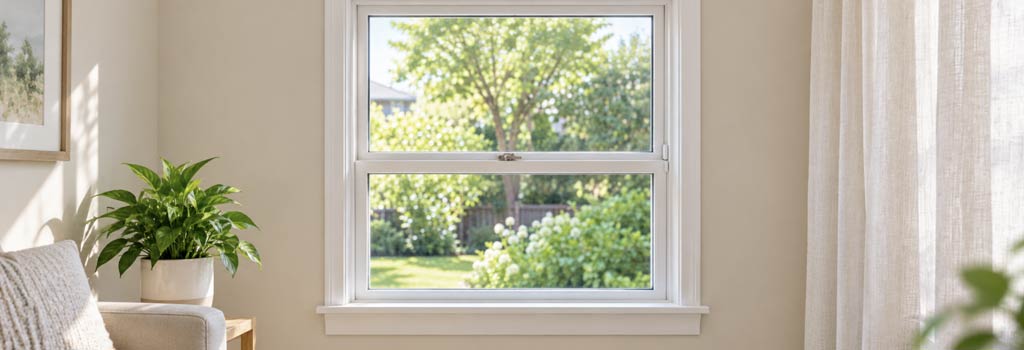
A window that closes but does not lock properly deserves attention before you buy another security gadget. The same applies to a loose frame, damaged hardware, or a basement window hidden behind overgrown shrubs. Effective home window security starts with the condition of the opening, then adds protection suited to how that window is used.
Locks, bars, security film and smart sensors serve different purposes. Some help resist entry; others alert you to activity. Choosing the right combination means protecting your home while keeping everyday operation and emergency escape straightforward.
Start With the Windows Someone Can Reach
Walk around the outside of your home and note which windows are accessible from the ground, a deck, a porch roof or outdoor furniture. Include side and rear windows, where activity may be less visible from the street.
Then check those windows from inside:
- Does the sash—the moving part of the window—close fully?
- Does the lock engage securely without forcing the handle?
- Are the lock, keeper and surrounding frame firmly attached?
- Is there cracked glass, damaged framing or loose hardware?
- Can everyone who uses the room open the window when needed?
For each opening, identify the problem before choosing a product. A sensor will not repair a failing lock, and film will not strengthen rotten framing. Also identify any windows that form part of your emergency escape plan before adding locks, bars or other restrictions.
Window Security Options at a Glance
| Option | Main role | Best starting point | Important limitation |
|---|---|---|---|
| Suitable window locks | Keep an operable sash secured | Windows with worn, missing or inadequate hardware | Their effectiveness depends on the frame, fixings and correct engagement |
| Security bars or grilles | Add a physical barrier | Accessible basement or ground-floor openings where suitable | Must not obstruct required emergency escape |
| Security film system | Help retain broken glass and potentially delay penetration | Vulnerable glazing in serviceable frames | Does not make glass unbreakable; installation and attachment matter |
| Contact sensor | Detect opening or closing | Operable windows connected to an alarm or smart-home system | May not detect broken glass if the sash stays closed |
| Glass-break or shock sensor | Detect specified sounds or impacts | Additional detection where a contact sensor leaves a gap | Coverage, sensitivity and glass compatibility vary |
For example, a reachable rear window might benefit from repaired locking hardware and a contact sensor. If its glazing is also a concern, assess an appropriate film system separately. There is no need to install every type of product on every window.
Choosing Window Locks for Home Security
The best window locks for home security are compatible with the window and fastened to sound material. A larger lock is not automatically a better upgrade if its screws have little solid material to grip.
Sliding Windows
Check the original latch and keeper first. A compatible secondary track lock or stop may provide another restriction, but it should suit the frame profile and intended use. Have a window professional assess whether the sash and its retention hardware are secure.
Avoid improvised fixings that damage the track or interfere with drainage. If the window is used for emergency escape, any added device must preserve the required ability to open it from inside.
Single- and Double-Hung Windows
On hung windows, the meeting-rail lock needs both sashes to sit in the correct position. If the lock no longer lines up, investigate sash movement, worn hardware or frame distortion before simply fitting a replacement.
A ventilation stop limits how far a sash opens. Do not assume it provides the same protection as fully closing and locking the window. Similarly, a child-safety restrictor should not be treated as a tested burglary-resistant device unless the manufacturer specifically supports that use.
Casement and Awning Windows
Inspect the locking handle, keepers and any multipoint locking mechanism. The crank opens and closes the sash; it is not a substitute for engaging the designated lock.
If the handle feels unusually stiff or the sash will not pull snugly into the frame, have it adjusted or repaired. Forcing the mechanism can make an existing problem worse.
Before buying additional hardware: confirm compatibility, installation requirements and warranty implications with the window supplier. Do not drill into a vinyl frame without knowing the approved fixing position.
Basement Window Security Bars: Protection Without Blocking Escape
Basement window security bars add a physical barrier, but the release mechanism matters as much as the bars themselves. On a window required for emergency escape, choose a suitable system that releases quickly from inside without keys, tools or special knowledge. Confirm the installation with your local building or fire authority, particularly when creating or changing a basement bedroom.
Before installation, check:
- Whether the window is required for emergency escape.
- Whether the released grille leaves the necessary opening unobstructed.
- Whether the fixing points are structurally sound.
- Whether occupants can locate and operate the release easily.
- Whether the window well and route outside remain clear.
Ask the installer to demonstrate the release, then practise using it. Keep furniture, storage and curtains away from the mechanism, and inspect for corrosion or sticking during routine maintenance. A removable grille that requires finding a padlock key is not an appropriate substitute for a suitable emergency-release system.
What Window Security Film Can—and Cannot—Do
Window security film is applied to glass to help hold fragments together after breakage. A suitable installed system may delay forced entry, but it does not make glass unbreakable or guarantee that someone cannot get through.
Attachment is an important part of the specification. Depending on the system, an approved attachment method connects the filmed glass to its frame. Ask for performance information relevant to the proposed combination of glass, film, frame and attachment—not just the film’s thickness.
When comparing window security film options, ask:
- Is this product intended for security use, rather than only privacy or solar control?
- Is it compatible with my existing glazing and coatings?
- What attachment method is specified for the intended protection?
- What testing supports the proposed application?
- What curing time, cleaning instructions and warranty conditions apply?
Clear security film can preserve the appearance of the window. Privacy film has a different purpose, and reflective finishes do not provide dependable nighttime privacy when the interior is brighter than outside. Treat privacy and intrusion resistance as separate purchasing decisions.
Smart Window Sensors: Know What Triggers the Alert
A smart window sensor can tell you that something has changed at a window. The useful question is exactly what it detects—and what happens next.
Contact Sensors
A typical contact sensor has two components, usually mounted on the frame and moving sash. It detects when they separate as the window opens. Depending on the system and settings, that event may produce a chime, phone notification or alarm.
A basic contact sensor does not necessarily detect glass breaking while the sash remains closed. It also cannot physically prevent the window from opening.
Glass-Break and Shock Sensors
An acoustic glass-break sensor listens for particular sound patterns. A shock sensor detects vibration or impact at the surface where it is fitted. They provide different types of detection and should not be assumed to cover the same events.
Check the manufacturer’s guidance on placement, range, glass types and testing. If the glass has security film, confirm that the selected detector is suitable for that glazing arrangement.
Questions to Ask Before Buying
A sensor should fit your existing system and daily routine. Confirm:
- Whether it needs a separate hub or alarm base station.
- Whether your phone can receive the alerts you expect.
- Which functions require a paid subscription.
- What remains operational during an internet or power outage.
- How low-battery and offline warnings appear.
- Whether the sensor is rated for the temperatures near the window.
Test the complete sequence after installation: open the window, confirm the system registers it, and check that the intended notification or alarm occurs. Repeat testing as instructed by the manufacturer. An app notification alone does not mean emergency services will be contacted.
How to Secure Ground Floor Windows: A Practical Order of Work
If you are deciding how to secure ground floor windows, start with the basics and add protection around the remaining weaknesses.
1. Repair and Close Properly
Fix loose keepers, broken locks and damaged frames. Make sure the window closes fully and the locking mechanism engages. A sash left slightly open for ventilation is not equivalent to a closed, locked window.
2. Remove Convenient Access and Concealment
Keep ladders secured, move climbable storage away from windows and trim vegetation that conceals accessible openings. Avoid obstructing window wells or escape routes while rearranging the area.
3. Add Suitable Physical Protection
Choose compatible secondary locks where appropriate. Assess film for vulnerable glazing, or bars where a suitable installation can preserve escape. Match the product to the condition and construction of the opening.
4. Add Detection You Will Actually Use
Choose sensors that integrate with your routine. Set up clear alerts, maintain batteries and decide who will receive notifications when you are away. An alarm that is regularly bypassed because it is inconvenient offers less practical value.
5. Recheck Emergency Operation
After each upgrade, confirm that occupants can still use the designated escape opening. Review the route from the room to the outside, including curtains, furniture and any window-well cover.
Keep Window and Door Security Consistent
Window upgrades work best as part of a whole-home check. Include the front entrance, side door, patio door and access from an attached garage in the same review.
When assessing exterior doors, consider the complete assembly: door slab, frame, hinges, lock, strike and surrounding glazing. A strong lock cannot compensate for a damaged frame or poorly secured strike.
If you are considering steel doors, compare the construction, hardware and installation as well as the material. Steel alone does not make an entrance intrusion-proof, just as adding a lock does not solve every window weakness.
When Is Window Replacement Worth Considering?
An upgrade can be practical when the window and frame are in good condition. Replacement becomes worth discussing when damage, distortion or unavailable parts prevent a reliable repair.
Ask for an assessment if the window repeatedly fails to lock, the frame is deteriorating, or the sash no longer seats correctly. Request a clear explanation of what can be repaired and what would remain unresolved.
For a replacement window, ask about locking hardware, glazing choices and any relevant forced-entry testing for the complete product. Also confirm that the proposed style and installation preserve any required emergency opening. Security, ventilation and safe escape should be considered together.
Frequently Asked Questions
What is the best way to improve home window security?
Start by making sure accessible windows close and lock correctly. Then add suitable physical protection and detection based on each opening. Locks, film, bars and sensors address different problems, so the best choice depends on the window’s condition and use.
Can window security film replace locks or bars?
No. Film works on the glazing; locks secure the sash, and bars provide a separate physical barrier. A properly specified film system may complement other measures, but it should not be described as an equivalent replacement for them.
Are security bars suitable for basement bedroom windows?
Only if the installation preserves the required emergency escape function. A suitable inside release and an unobstructed opening are essential considerations. Confirm the proposed arrangement with the local building or fire authority before installation.
Will a smart window sensor detect broken glass?
A basic contact sensor detects the window opening. If the glass breaks while the sash stays closed, it may not trigger. Glass-break or shock detection can add coverage, subject to the device’s compatibility and installation requirements.
Can I secure a window while leaving it open for fresh air?
Some hardware limits the opening for ventilation, but a restricted opening should not be treated as equivalent to a fully closed and locked window. Follow the product’s stated purpose and preserve emergency operation wherever required.
Do I need to replace every window to improve security?
Not necessarily. Repairing hardware, adding compatible protection and installing suitable sensors may be enough for serviceable windows. Consider replacement where the existing frame, sash or hardware cannot be restored to reliable operation.